How Solar Panels Work
Solar panels have become a symbol of clean energy, powering homes, offices, and even entire cities. But while most of us see them as shiny blue or black boards on rooftops or fields, few understand how they actually convert sunlight into usable electricity. The process combines science, technology, and innovation. Let’s break it down step by step.
1. The Basics of Solar Energy
At the core of solar technology is the photovoltaic (PV) effect, discovered in the 19th century. This effect describes how certain materials can generate an electric current when exposed to light. Modern solar panels are made up of many photovoltaic cells, each designed to capture sunlight and turn it into electricity.
Sunlight is made up of particles called photons, which carry energy. When these photons strike the surface of a solar cell, they transfer their energy to electrons inside the material. This is the spark that begins the electricity generation process.
2. Structure of a Solar Cell
A typical solar cell is made of silicon, a semiconductor material. Silicon is chosen because it has special electrical properties that make it ideal for absorbing sunlight. Each cell is constructed with two layers of silicon:
-
N-type layer (negative): This layer has extra electrons.
-
P-type layer (positive): This layer has missing electrons, also called “holes.”
When these two layers are placed together, they create a p-n junction, which acts like an electric field. This field pushes electrons in one direction, forming a flow of current when light hits the cell.
3. Converting Sunlight to Electricity
Here’s the step-by-step process:
-
Photon absorption: Sunlight hits the solar cell, and photons are absorbed by the silicon material.
-
Electron excitement: The energy from photons knocks electrons loose from atoms.
-
Current creation: The built-in electric field at the p-n junction forces these electrons to move in a single direction.
-
Wiring the cells: Thin metal contacts on the top and bottom of the cell capture the moving electrons, creating an electrical current.
At this point, the electricity produced is direct current (DC). However, most household appliances and electrical grids use alternating current (AC). That’s where an inverter comes in—it converts DC into AC, making the electricity usable in everyday life.
4. How Solar Panels Are Connected
One solar cell only produces a small amount of power, typically around 0.5 volts. To generate enough energy for practical use, many cells are connected together into a larger panel. Multiple panels can also be linked to form a solar array, which is capable of powering homes, businesses, and even solar farms.
The generated electricity can be used immediately, stored in batteries, or sent back into the power grid through a process called net metering, where homeowners can earn credits for the excess electricity they supply.
5. Efficiency Factors
Not all sunlight that hits a solar panel is converted into electricity. The efficiency of a solar panel—usually between 15% and 22% for commercial panels—depends on several factors:
-
Quality of materials: Monocrystalline panels are more efficient than polycrystalline ones.
-
Temperature: Excessive heat can reduce performance.
-
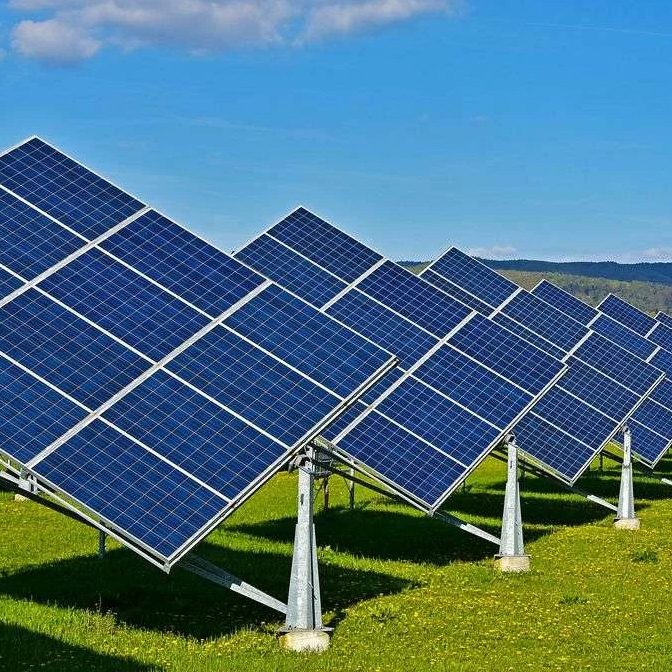
Angle and placement: Panels facing the sun directly capture the most energy.
-
Dust or shading: Anything blocking sunlight reduces output.
6. The Bigger Picture
Solar panels represent more than just a technology—they’re part of a global movement toward renewable energy. By harnessing the sun, one of Earth’s most abundant resources, we reduce our reliance on fossil fuels, cut down on greenhouse gas emissions, and move closer to sustainable living.
Conclusion
Solar panels work by capturing sunlight and turning it into usable electricity through the photovoltaic effect. From photons striking silicon cells to electrons flowing in a circuit, the process is a fascinating mix of science and innovation. While challenges like efficiency and installation cost remain, the technology continues to improve, making solar power an increasingly important part of our energy future.